
Old brick chimney leaning after foundation settling in Bexley: How urgent is chimney
You live in Bexley, near Capital University or along Broad Street, and you have noticed your old brick chimney tilting after nearby foundation settling. Ohio clay soils, the freeze and thaw of winter, and older unreinforced masonry all contribute to this problem. If you search "chimney repair near me" in Columbus you want an answer you can act on, not vague fear. This article explains how urgent a leaning chimney is, what a qualified mason will check, and the phased repairs a Columbus crew like Chimcrew - Chimney Sweep & Repair recommends so you can plan safety and cost.
You can call Chimcrew - Chimney Sweep & Repair at (614) 683-5763 for an inspection, or request a targeted service such as chimney repair columbus if you already know you need work. Read on for signs of danger, short term measures you can get quickly, and long term structural fixes that protect your home and heating system.
Key takeaways
- A visibly leaning chimney after foundation settling is potentially dangerous and needs prompt professional assessment.
- Columbus masons stage repairs: assessment and stabilization, structural repair, and finishing with weatherproofing and liners.
- Freeze-thaw cycles and Ohio clay soils commonly worsen chimney lean around Bexley; temporary shoring can buy time but is not a final fix.
- Costs vary widely by damage; Chimcrew - Chimney Sweep & Repair provides clear scopes and can perform brick, crown, cap, and liner work as needed.
Why chimneys lean in Bexley and when it becomes urgent
In Bexley, foundations and chimneys are affected by the same local conditions: seasonal ground movement, older foundations on clay soils, and trees with roots near foundations. Common causes of a leaning chimney include:
- Foundation settling under the chimney or the house footprint, creating differential settlement.
- Erosion of the footing around the chimney base, especially after heavy rain or poor grading.
- Deteriorated mortar and brick from freeze and thaw cycles during Ohio winters.
- Missing or failed metal reinforcement in older chimneys.
A leaning chimney becomes urgent when you see any of these signs:
- A gap forming between the chimney and the roof or where it meets the house wall.
- Vertical cracks that run through several brick courses, or mortar that has fallen out in chunks.
- Loose bricks that move when you push them.
- Bowing that makes the chimney visibly out of plumb by several inches.
If you observe those signs, schedule an inspection within days. A chimney that separates from the house or loses support can collapse, damage the roof, and create fire and carbon monoxide risks.
What a professional inspection covers
When you hire a Columbus mason, the inspection is both visual and diagnostic. Expect these steps:
- Exterior assessment of plumb, cracks, mortar loss, and the mortar joint condition.
- Examination of the chimney base, flashing, and the connection to the roof where water can enter.
- Evaluation of nearby grade and drainage that may have caused footing exposure or erosion.
- Interior flue and liner inspection using a camera to detect separations, cracked liners, or blockages.
- Measurement of tilt with a level and documented photos so you can compare later.
A full inspection results in a written scope showing what is immediate, what can wait, and what must be rebuilt. Chimcrew - Chimney Sweep & Repair provides that scope and separates immediate safety items from cosmetic work. If the flue liner is damaged you may need services chimney liner repair in the same visit.
Phased repairs Columbus masons recommend
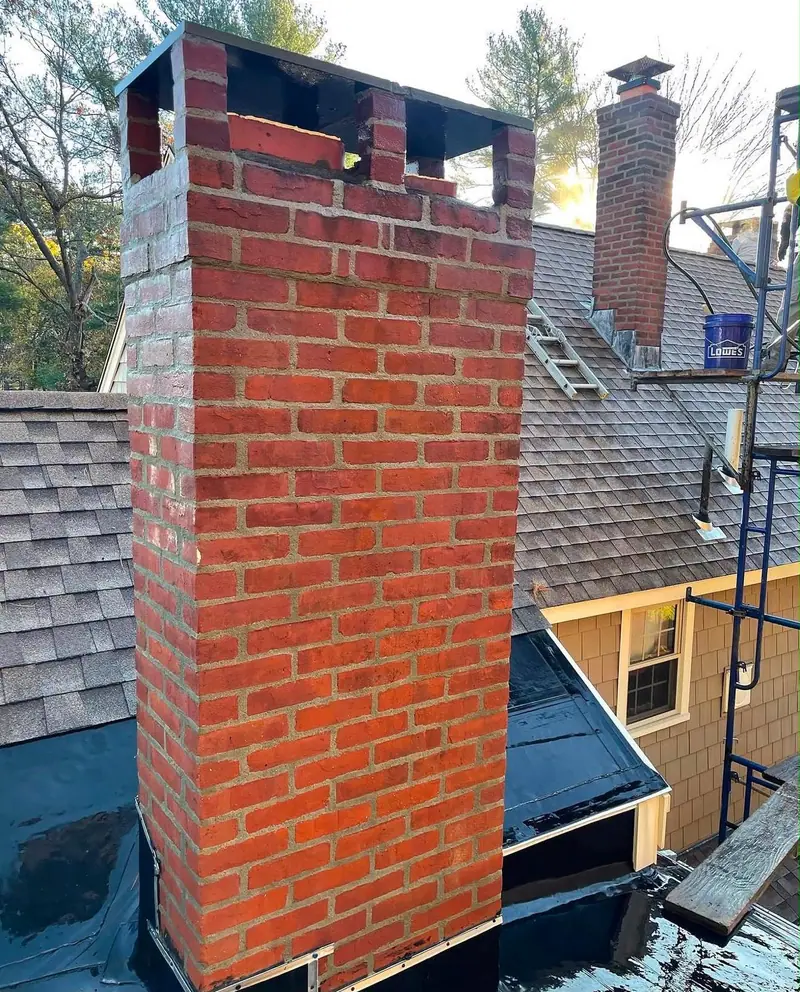
Experienced masons recommend a phased approach so you address safety first and spread cost over time. Typical phases are:
- Phase 1: Emergency stabilization and hazard abatement
- Phase 2: Structural rebuilding or reinforcement
- Phase 3: Weatherproofing and finishing
Phase 1: Emergency stabilization and hazard abatement
- Temporary bracing or shoring to hold the chimney in place if it is unstable.
- Clearing loose bricks and installing a temporary cap to keep precipitation out.
- If the chimney has major separation from the house, installing temporary supports and securing the roof area to prevent water entry.
This phase prevents collapse and limits interior water and smoke damage.
Phase 2: Structural rebuilding or reinforcement
- Partial or full rebuild of the chimney down to sound footing when mortar and bricks are beyond repair.
- Underpinning or improving the footing if settlement caused the lean; this can include concrete piers or engineered masonry anchors.
- Tying the chimney back to the house structure with metal anchors when appropriate.
- Repairing brickwork with historically appropriate replacement units and mortar matched to the original.
For localized damage you may only need targeted services chimney brick repair rather than a full rebuild.
Phase 3: Weatherproofing and finishing
- Replacing or repairing the crown using proper slope and expansion joints to prevent water intrusion. See services chimney crown repair for options.
- Installing or repairing a chimney cap and spark arrestor to keep water and animals out. See services chimney-cap-repair.
- Repairing flashing and roof transitions so the chimney does not cause leaks.
- Relining the flue if needed to meet code and restore safe venting.
Staging work this way lets you get safety measures done first, then plan for more extensive structural work when you are ready.
How much time do you have before a leaning chimney becomes urgent?
There is no single answer, but local conditions influence risk. In Columbus and Bexley, rapid freeze and thaw in late winter and spring can accelerate mortar loss and brick spalling. If your chimney is leaning and you see active movement, big cracks, or bricks falling, treat it as urgent and call for stabilization the same day.
If the lean is minor and stable, you may have weeks to arrange professional assessment and to plan repairs. Do not delay a licensed inspection more than a few weeks, because water infiltration through cracks will worsen during rain and freeze cycles. Use temporary precautions in the meantime: avoid lighting fires, keep the area under the chimney clear, and protect the interior with tarps if there is any sign of leakage.
Cost expectations and financing your repair
Chimney repair costs vary widely based on the extent of structural work, accessibility, and materials. Typical ranges are:
- Minor tuckpointing and brick replacement: lower thousands of dollars.
- Crown and cap repairs with flashing: low to mid thousands.
- Partial rebuild or reinforcement: several thousand dollars.
- Full rebuild from the roofline or foundation with underpinning: typically high thousands to over ten thousand dollars.
Chimcrew - Chimney Sweep & Repair provides a written estimate after inspection with a clear breakdown so you know what is immediate and what can be phased. If budget is a concern, ask about payment options; many companies offer financing or phased scheduling so you can address the safety items first and plan the rest.
For insurance questions see the FAQ below about coverage. Keep all inspection reports and photos, as those documents help with claims if damage is covered by your policy.
Small preventive steps you can take now
You cannot safely straighten a leaning chimney on your own, but you can reduce the chance of rapid deterioration:
- Stop using the fireplace until a professional inspects the flue and structure.
- Clear gutters and improve grading so water is directed away from the house and chimney base.
- Keep tree roots away from the foundation and avoid planting large trees near the chimney footing.
- Cover exposed areas with a tarp only as a temporary measure, and do not attempt to support the chimney yourself with makeshift braces.
If you want an inspection, call Chimcrew - Chimney Sweep & Repair at (614) 683-5763. Our team documents the condition and recommends the correct mix of immediate and long-term repairs so you can make informed choices.
Why choose a local Columbus mason for this work
Local masons understand Bexley and Columbus building history, soil conditions, and seasonal cycles. A locally focused crew provides these advantages:
- Knowledge of Ohio freeze-thaw effects on masonry and the right mortar mixes for lasting repairs.
- Familiarity with neighborhood construction styles around Bexley Circle, Broad Street, and the area near Capital University so repairs match your home.
- Faster response for emergency stabilization and the ability to schedule in seasons when weather is best for masonry work.
Chimcrew - Chimney Sweep & Repair specializes in chimney inspection, cleaning, and structural repair. We combine camera inspections with documented scopes and phased repair plans that address immediate hazards first. If you need brick, crown, cap, or liner work we perform those trades directly and coordinate with roofers and structural engineers when the job requires it.
Frequently asked questions
What is the average cost to repair a chimney?
Costs range widely based on damage. Minor tuckpointing and small brick repairs typically run in the low thousands of dollars. Crown, cap, and flashing repairs are often in the low to mid thousands. Partial rebuilds or underpinning to correct settlement are several thousand dollars, and full rebuilds from the roofline or foundation often exceed ten thousand dollars. Chimcrew - Chimney Sweep & Repair inspects your chimney, documents the damage, and provides a written estimate so you understand immediate costs and options to phase work.
Is chimney repair covered by homeowners insurance?
Insurance coverage depends on cause and policy language. Sudden damage from an accident or a covered peril may be covered, but normal wear and tear, deferred maintenance, and damage from long-term settling often are not. Keep inspection reports and photos after an incident and check your policy or contact your agent. Chimcrew - Chimney Sweep & Repair can provide documentation and a damage report to support a claim.
What is a common chimney problem?
A very common problem is deteriorated mortar joints and spalling brick caused by freeze-thaw cycles, especially in Columbus winters. This leads to water infiltration, crumbling joints, and eventual leaning or separation if left unaddressed. Other frequent issues include cracked crowns, missing caps, and damaged flue liners that reduce safety and efficiency.
Can I fix my chimney myself?
No. Chimney repair involves structural work, proper mortar mixes, and often working from the roof. Improper DIY repairs can make the problem worse, create leaks, and endanger you. For safety and code compliance call a licensed professional. Chimcrew - Chimney Sweep & Repair provides assessments, emergency stabilization, and phased repairs so you get a safe, lasting solution.
Ready to get started? Contact Chimcrew - Chimney Sweep & Repair today.
Call (614) 683-5763Request service online