
Can a Victorian home in German Village keep using a crumbling fireplace surround until
You own a Victorian in German Village. The fireplace is part of the house story, but the surround is crumbling and loose. You wonder if you can keep using the fireplace through fall and winter, or if a repair now will prevent a larger structural problem.
This article explains the real risks specific to Columbus, Ohio climate and to older brick and lime-mortar construction common in German Village and Driving Park. You will get clear signs to watch for, what happens if you wait, and practical next steps that fit a historic home's needs. If you want an inspector on-site, schedule professional chimney repair Columbus to book an assessment and estimate.
Key takeaways
- Minor cosmetic cracks are different from structural failures that require immediate repair.
- Columbus freeze and thaw cycles can rapidly worsen masonry damage through winter.
- Arrange a professional inspection now to prevent water intrusion, flue damage, and costly rebuilds.
- Chimcrew - Chimney Sweep & Repair offers targeted fixes for wood and gas fireplaces plus damper and flashing repairs.
Why German Village Victorian surrounds are vulnerable in Columbus weather
German Village homes often have historic brick, soft mortar, and ornamental stone or terracotta surrounds. Those materials react to the Central Ohio climate in predictable ways:
- Freeze and thaw: Moisture drawn into cracks expands when it freezes and widens gaps. Columbus averages multiple freeze-thaw cycles between November and March, and that accelerates deterioration.
- Saturation from prolonged autumn rains: Heavy October and November rains in our region soak porous masonry, increasing the chance of spalling and mortar loss.
- Chimney and flue movement: Thermal cycling from regular fires causes expansion and contraction. Over decades that can loosen the surround and detach decorative pieces.
- Salt and de-icing exposure: If the surround faces a sidewalk or entry, salts tracked in can compound masonry breakdown.
Because these mechanisms are common in German Village, what looks cosmetic often hides a developing structural problem. You should evaluate both the visible surround and the flue and chimney components behind it.
Immediate risks of using a fireplace with a crumbling surround
Continuing to burn fires while the surround is compromised raises several concrete risks:
- Falling material hazard: Loose bricks, mortar, or trim pieces can fall into the firebox or room, creating injury or ignition hazards.
- Water intrusion: Cracks let rain and melting snow reach inner masonry and the wood framing behind the surround, causing rot and mold.
- Flue damage and inefficiency: Gaps at the throat or smoke shelf let combustion gases contact masonry they should not, increasing soot buildup and chimney degradation.
- Fire spread: When masonry no longer provides a proper barrier, heat transfer to framing increases the chance of concealed fire spread.
If you see any loose or actively falling material, you should stop using the fireplace immediately and call for inspection.
Signs you must repair now versus repairs that can wait until spring
Not every crack needs emergency intervention, but these observations mean act now:
- Large sections of surround are loose or moving when nudged.
- You see new cracks after a heavy storm or freeze cycle.
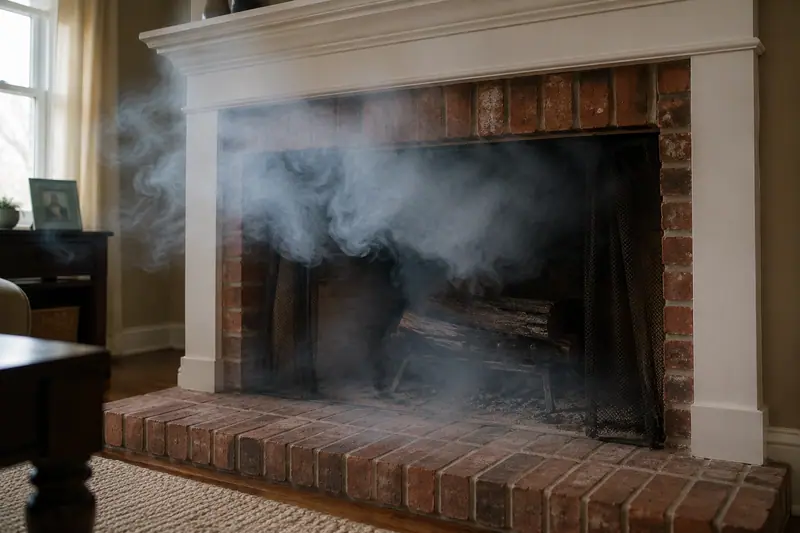
- You smell soot or notice smoke in the room that did not occur before.
- Water staining, wet masonry, or mold near the surround or hearth.
- Visible gaps between the firebox and surround trim exposing wood framing.
You may be able to wait until spring if the damage is purely superficial: small hairline cracks in lime mortar, stable mortar joints with no spalling, and no moisture signs. However, even small cracks can widen over winter. To avoid a winter emergency call during a snow event, schedule a diagnostic now.
If you need hands-on repairs for interior components, Chimcrew - Chimney Sweep & Repair provides services wood fireplace repair and can assess whether temporary precautions are safe until a full restoration is scheduled.
What a professional inspection and repair will include
When Chimcrew - Chimney Sweep & Repair inspects a crumbling surround we evaluate the full system, not only the visible trim. Typical steps:
- Visual and tactile exam of the surround, hearth, lintel, and mantel area.
- Camera inspection of the flue and chimney interior where accessible, to check for cracks or offsets.
- Moisture testing and identification of water entry points, including roof flashing and mortar joints.
- Safety assessment for immediate use, and written recommendations with prioritized fixes.
Common repairs we perform:
- Pointing and tuckpointing to restore mortar joints and prevent water entry.
- Reattachment or replacement of loose trim, terracotta, or stone.
- Flue patching and crown repairs to stop water and gas leakage.
- Damper work or replacement to restore proper draft and safety. We offer fireplace damper repair when dampers are warped or failing.
If the hood or surround requires flashing attention at the roof intersection, we coordinate flashing repair to stop water migration, and we can bring in our flashing specialists where needed.
Costs and timing: what to expect in Columbus
Repair costs depend on scope and materials. For a historic Victorian surround expect a wider range because custom trim or period materials may be required.
- Small mortar repairs and stabilizing loose bricks typically start in the lower hundreds.
- Replacing a damaged lintel, reattaching decorative elements, and moderate tuckpointing commonly fall in the mid-hundreds to low thousands.
- Major rebuilds, full surround replacement, or extensive water damage remediation can reach several thousand dollars.
You can get a firm written estimate after inspection. Scheduling in the shoulder months, now through November, reduces emergency rates and avoids winter delays. Call Chimcrew - Chimney Sweep & Repair at (614) 683-5763 to reserve an inspection; prompt scheduling also prevents escalating costs caused by freeze-thaw cycles.
Quick do-it-now precautions while you wait for repair
If you cannot get immediate repairs, take these sensible steps to reduce risk:
- Stop using the fireplace if material is loose or if you notice changes in smoke behavior.
- Use the central heating system instead of supplemental wood fires during wet periods.
- Keep gutters and downspouts clear near the roofline above the chimney to reduce water saturation.
- Place a tight-fitting covering over the opening when not in use, like a metal screen, to reduce drafts and limit rain entry.
- Avoid using salt or harsh chemicals on nearby walkways that could splash back onto the surround.
These measures lower short-term risk but do not replace a professional repair. A timely inspection identifies concealed problems before they produce major damage.
How Chimcrew - Chimney Sweep & Repair approaches historic home repairs in Columbus
We work with German Village homeowners and preservation specialists to match repair techniques to historic materials. Our approach is:
- Diagnose the whole system: surround, hearth, flue, damper, and flashing.
- Recommend repairs that respect original materials while meeting modern safety codes.
- Provide a clear written estimate and timeline, including preservation-minded options if you want period-correct finishes.
You can read more about our services and schedule an assessment on our home page. For gas fireplaces we offer specific diagnostics and repairs through our services gas fireplace repair team.
Frequently asked questions
What is the average cost to fix a fireplace?
Costs vary by damage and materials. Small repairs such as mortar patching and stabilizing loose brick typically start in the low hundreds. Moderate work, including tuckpointing, reattaching trim, or replacing a damaged lintel, commonly runs from several hundred to a few thousand dollars. Full rebuilds or extensive water damage repairs can cost more. Chimcrew - Chimney Sweep & Repair inspects the fireplace and provides a written estimate tailored to your German Village home before any work begins.
How do you fix a crack in a fireplace?
A crack repair depends on location and depth. Hairline surface cracks in mortar can often be filled with compatible mortar or a mortar repair compound. Structural cracks that go through brick or into the lintel require removing and replacing damaged units, repointing surrounding joints, and addressing the root cause, such as water intrusion or flue movement. Chimcrew - Chimney Sweep & Repair performs a full assessment to recommend the correct materials and method for historic masonry, avoiding incompatible cement mortars that can cause further damage.
Can a plumber fix a fireplace?
A plumber does not typically repair masonry, flues, or fireplace surrounds. Plumbers can work on gas lines and gas appliance connections, but fireplace masonry, dampers, crowns, and chimneys require a chimney specialist. For gas-related issues we coordinate with certified gas technicians, and for masonry and flue work Chimcrew - Chimney Sweep & Repair handles the repair and safety testing to ensure proper ventilation and fire containment.
Where can I get my gas fireplace repaired in Dallas, Texas?
Chimcrew - Chimney Sweep & Repair operates in Columbus, Ohio, and does not provide service in Dallas, Texas. If you are in Columbus and need gas fireplace work, we perform diagnostics and repairs through our services gas fireplace repair team. For Dallas, search for a local certified gas fireplace technician or contact the gas appliance manufacturer for recommended providers.
Ready to get started? Contact Chimcrew - Chimney Sweep & Repair today.
Call (614) 683-5763Request service online