Repair or Replace a Masonry Chimney in Columbus
By Chimcrew - Chimney Sweep & Repair Editorial Team · 3 min read
For most homeowners the right first step is a safety-first inspection. Repair when issues are localized and the chimney structure and liner are basically sound. Replace when there is structural movement, widespread material failure, or an irreparably damaged flue liner. Read the decision guide below, check the warning signs immediately, and schedule a professional inspection to get a photo-documented estimate before you decide.
TL;DR
- If damage is localized and structure is sound, targeted masonry repairs and relining usually make sense.
- Immediate inspection is required for leaning chimneys, large cracks, evidence of a chimney fire, or active leaks.
- Columbus freeze-thaw cycles and poor flashing accelerate masonry failure; factor this into replace vs repair thinking.
- Get an itemized inspection report with photos and a relining vs rebuild cost comparison before deciding.
- Preparing your home and understanding the expected timeline reduces surprises and hidden costs.
Decision Guide: Should You Repair or Replace?
Follow these checks in order. Start with the top items and stop when a recommendation directs you to call a professional.
These indicate compromised foundations or support that repairs alone often cannot correct safely
Widespread material failure shortens safe lifespan and makes future leaks and collapse more likely
Localized maintenance restores weatherproofing and can extend life for many years
A safe flue requires an intact liner; relining often costs less than rebuilding the entire stack
Recurring failures suggest an underlying structural or moisture problem that repairs are masking
How Columbus Weather Affects Masonry Chimneys
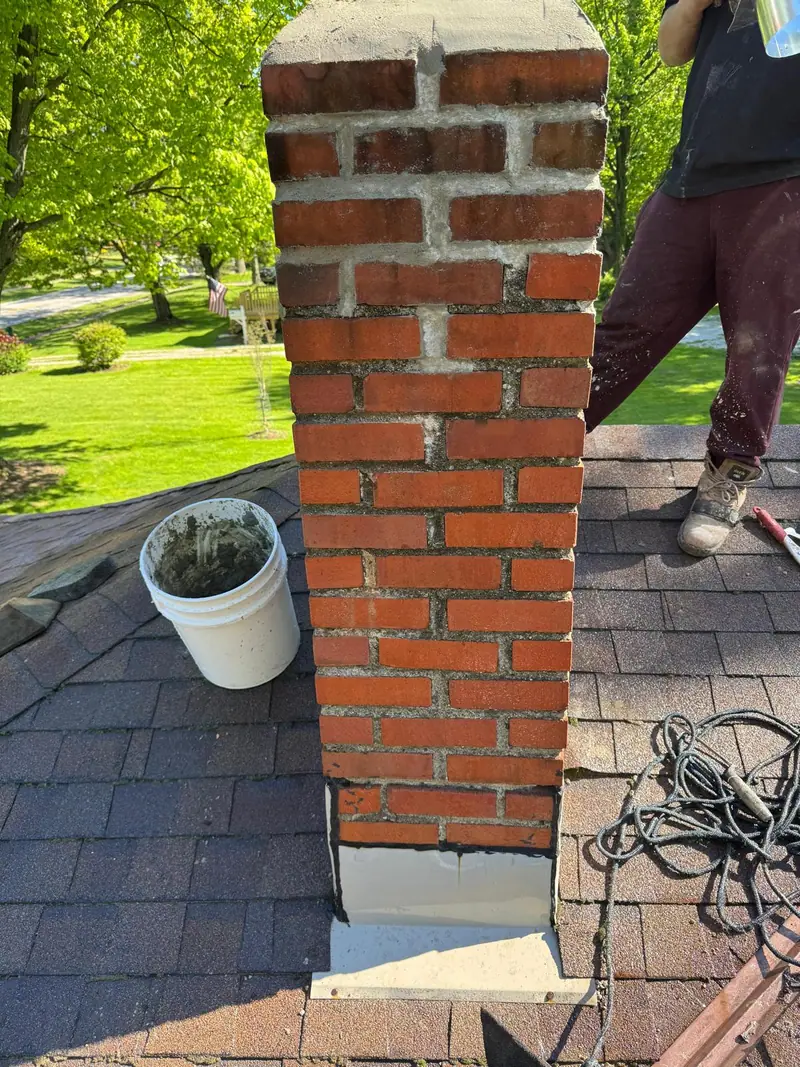
Columbus sees many freeze-thaw cycles that push moisture into small cracks, then expand and widen those cracks when temperatures drop. That cycle is the main reason mortar joints and brick faces spall and fail earlier here than in milder climates.
- Poor or aging flashing allows roof runoff into chimney bricks and pockets where water freezes.
- Heavy spring and summer rains expose crowns and mortar to saturation, increasing risk of deterioration.
- Many local homes were built with older mortar mixes or clay liners that become brittle over decades.
When you evaluate repair versus replacement, consider whether the underlying moisture source can be permanently fixed. Repeating repairs without correcting flashing, crown drainage, or roof intersections is a common reason chimneys fail again.
Five Warning Signs That Demand Immediate Attention
These are urgent. Stop using the fireplace and call for an inspection if you see any of them.
- Leaning chimney or visible separation from the house
- Large vertical cracks through multiple bricks or mortar that allow you to see into the flue
- Active leaks that flow down the interior walls or attic when it rains
- Severe spalling where brick faces are flaking off in chunks
- Evidence of a chimney fire such as heavy cracking, collapsed flue material, or an intense burnt smell
Cost Factors for Columbus Projects
Prices vary. These are the variables that most influence final quotes.
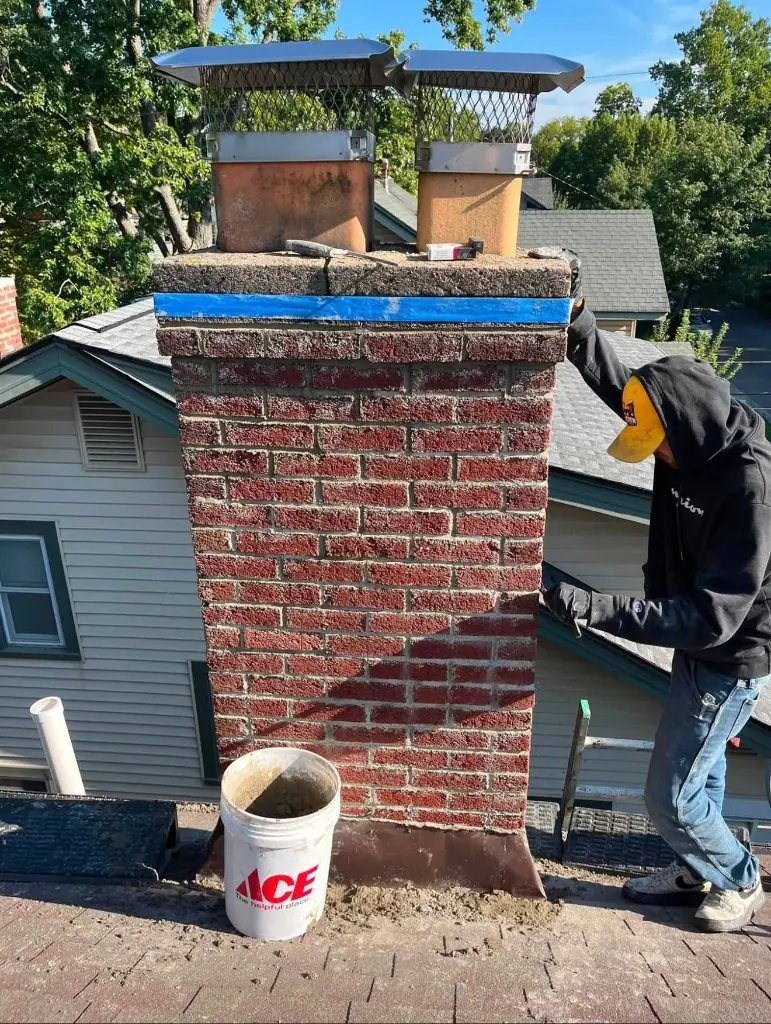
Tuckpointing a few square feet costs far less than rebuilding several feet of the stack
Tall stacks or chimneys requiring neighborhood scaffolding increase labor and equipment costs
Installing a stainless steel liner or cast-in-place liner adds to cost but is required if the original liner is damaged
Replacing the crown and flashing is a common add-on to stop leaks; defective flashing can cause repeated failures
Repairing or underpinning a chimney foundation is among the most expensive items and often pushes a job toward replacement
Permit costs and seasonal delays (Columbus freeze-thaw timing) affect schedule and price
Comparison Table: Repair vs Replace (When It Makes Sense)
Use the comparison table above to weigh short-term savings against long-term value. Repairs are appropriate when the stack is fundamentally sound and the work addresses the moisture or liner issue. Replacement becomes the responsible option when repairs are likely to be temporary or when safety is compromised.
What Chimcrew Will Inspect & Deliver
A thorough inspection examines the chimney crown, mortar joints, brick condition, flashing, roof intersections, the flue liner, and foundation connection. You should receive a photo-documented report and clear recommendations that separate safety issues from cosmetic ones. Chimcrew can perform inspections, cleaning, and masonry repairs, and provide relining or rebuilding estimates. For details on typical masonry repairs see this service page: chimney repair columbus.
Typical Timeline: Inspection to Completion
These are representative durations to help you plan. Weather and permit requirements can change schedules.
- 1Inspection and report
1 to 3 days to schedule; inspector documents masonry, crown, flashing, and liner. You should receive photos, findings, and itemized repair and replacement estimates. - 2Small repairs (tuckpointing, crown patch, flashing)
1 to 5 days on-site depending on size. Minimal scaffolding for low chimneys; cleanup same day. - 3Relining
1 to 3 days on-site for stainless steel relining with additional curing or testing time if needed. - 4Partial rebuild
3 to 10 days depending on how much of the stack is rebuilt. Includes scaffolding setup and mortar cure time. - 5Full rebuild
1 to 4+ weeks. Foundation repairs or permits often lengthen the schedule. Expect more site protection and waste removal.
How to Prepare Your Home Before Work Begins
- Clear roof and attic access so crew can set up scaffolding if needed
- Move or cover furniture and electronics near the fireplace or work area
- Keep pets and children away from the work zone
- Arrange parking for crew vehicles near the house
- Turn off the fireplace and gas lines if requested by the crew
Preparation saves time and lowers the chance of surprises mid-job.
Local Insight & Real Columbus Examples
In Columbus we see many chimneys with mortar erosion at roof level caused by flashing failures after heavy rains. Older clay liners are another frequent issue; if a video inspection shows a cracked clay liner the common next step is a relining estimate. Neighborhoods with older housing stock often require more frequent tuckpointing because original mortar mixes were softer than modern standards. Keep this local wear pattern in mind when comparing quotes.
Expert Note from Chimcrew
Next Steps: Schedule a Professional Inspection
If you identified any warning signs or if you are unsure about recurring problems, schedule a certified chimney inspection and estimate. Call Chimcrew at (614) 683-5763 or visit our masonry repair page to request an inspection and written report: chimney repair columbus. A documented inspection will show whether targeted repairs will be durable or whether replacement is the safer long-term solution.
Frequently asked questions
How long does a typical chimney inspection take?
A standard certified chimney inspection usually takes 45 minutes to 90 minutes depending on chimney complexity. The inspector documents visible masonry, the crown, flashing, and flue liner condition and provides photos and recommendations.
Can a cracked chimney crown be repaired or must it be replaced?
Small cracks in a crown can often be repaired with proper patching or a new crown overlay. Large, deep cracks that allow water into the structure or recurring crown failures often mean the crown should be replaced to stop ongoing water damage.
Will relining solve smoke and draft problems?
If smoke or drafting issues stem from a damaged or missing liner, relining frequently corrects the problem. However, drafting can also be affected by chimney height, flue size, and nearby roof or wind conditions, so a full diagnostic is important.
How can I tell if the chimney foundation is failing?
Signs include separation of the chimney from the house, cracks at the chimney base, or a noticeable lean. These suggest foundation movement and should prompt a structural inspection before any cosmetic repairs.
How often should I schedule chimney cleaning and inspection in Columbus?
Most homeowners benefit from an annual inspection and cleaning if you use the fireplace frequently. Inspections after unusual burning, a chimney fire, or visible exterior damage are also recommended.
Ready to get started? Contact Chimcrew - Chimney Sweep & Repair today.
Call (614) 683-5763Request service online