Gas fireplace inspection: what every homeowner should know
A clean fire and no chimney soot does not mean a gas fireplace is safe. Here is exactly what a proper gas fireplace inspection covers — and the failures we find most often.
Why gas fireplaces still need an annual inspection
Gas fireplaces feel low-maintenance because they do not produce visible soot or creosote the way wood fires do. That perception is the single biggest reason we get called to homes with serious safety issues — failed thermocouples, cracked heat exchangers, blocked vents, and rodent damage in vent terminations.
The Chimney Safety Institute of America, the National Fireplace Institute, and the gas appliance manufacturers themselves all recommend an annual inspection. The Ohio Residential Code echoes that standard. A gas fireplace inspection is not optional maintenance — it is the only routine check standing between a small, fixable issue and a carbon monoxide event.
What a real gas fireplace inspection covers
A proper inspection always includes: a combustion analysis with a calibrated CO meter at the firebox and at the room air, visual inspection of the burner ports and pilot assembly, thermocouple or thermopile millivolt test, gas pressure check at the manifold, glass-front seal and gasket condition, log placement against the manufacturer's diagram (incorrect placement is the #1 cause of soot and CO), and full venting inspection from termination cap back to the appliance.
For direct-vent units, the technician should pull the glass, inspect and clean the burner, check the air mixer, vacuum the firebox, polish the glass with non-ammonia cleaner, and reseat the gasket. For B-vent or natural-vent units, the chimney itself still needs a Level 1 inspection because gas combustion produces water vapor that can corrode metal liners and erode masonry over time.
The failures we find most often in Ohio homes
Spider and insect blockage in the pilot orifice. Tiny mud-dauber wasps and spiders are attracted to the mercaptan odorant in natural gas. Their webs clog pilot assemblies and cause intermittent ignition failures — extremely common in central Ohio after summer.
Failed thermocouples and thermopiles. These are the small sensors that prove the pilot is lit before the main valve opens. They typically last 5–10 years. A weak thermopile reading (under 350 mV under load) is the most common reason a gas fireplace will not stay lit.
Cracked or warped logs. Ceramic logs are not decorative — their shape and position direct flames and air. A broken log can redirect flame onto the glass or burner ports, causing sooting that quickly clogs the orifices and creates incomplete combustion.
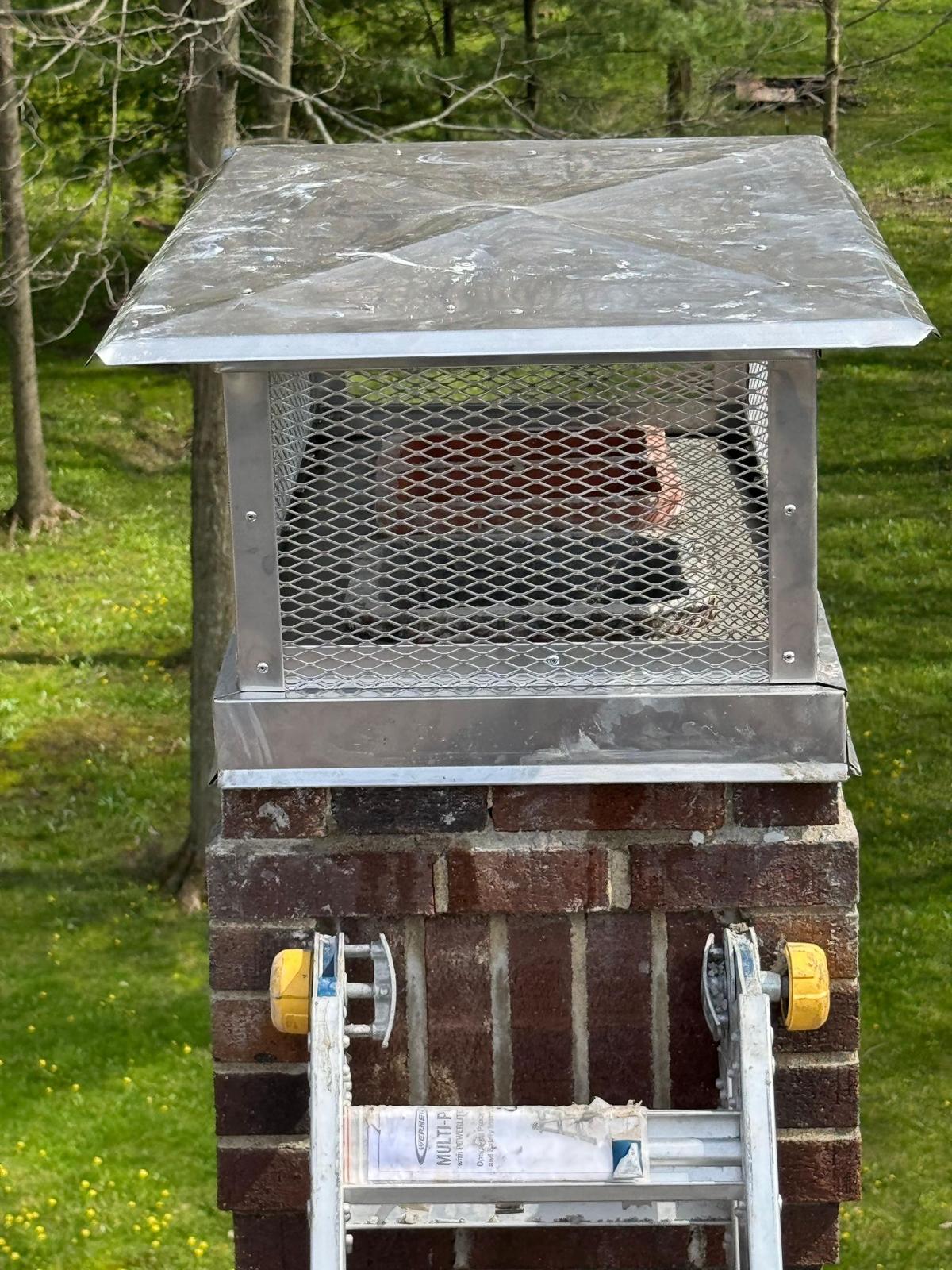
Blocked or damaged termination caps. We pull bird nests, leaves, and dryer-vent-style debris out of horizontal direct-vent terminations every fall. A partially blocked vent will produce CO and may not trip an under-rated detector.
Carbon monoxide drift. Even a properly burning gas fireplace can leak combustion products into a room if the gasket is failed, the glass is cracked, or the venting is compromised. A combustion analyzer is the only way to know.
When to schedule and what to expect
Schedule a gas fireplace inspection every fall, before first use. In Ohio that means August through October. A standard inspection takes about 60 to 90 minutes per appliance and costs roughly $159 to $249 in 2026 depending on access and whether the unit is direct-vent, B-vent, or vent-free.
You should receive a written report covering CO readings, manifold pressure, thermopile millivolts, venting condition, and any code or manufacturer-spec deviations found. Photos of the burner, logs, and venting are standard with a professional inspection.
Carbon monoxide: the part nobody wants to talk about
Every home with a gas appliance — fireplace, furnace, water heater, range — should have at least one UL-2034 listed CO detector on each floor and one within 10 feet of every sleeping area. Detectors expire; replace them every 5 to 7 years per the manufacturer's date stamp.
Symptoms of low-level CO exposure mimic the flu: headache, fatigue, dizziness, nausea that gets better when you leave the house. If multiple family members feel better away from home, suspect CO and have your gas appliances inspected immediately. A properly tuned gas fireplace produces near-zero CO in the room — anything else is a problem you can fix.
Choosing a qualified gas fireplace technician
Look for NFI Gas Specialist certification (NFI-G), CSIA credentialing, and current Ohio liability insurance. Many general HVAC techs are excellent at furnaces and air conditioning but have never been trained on hearth appliances. Gas fireplaces have their own venting standards, their own combustion math, and their own failure modes — and they sit in your living room. Hire a specialist.
◆ Live in Columbus, Cincinnati, or Dayton?